
Careful What You Wish For
As the host of a book club for people with disabilities, this was our August pick. Funnily enough, it took me almost the entire month to finish. One of my clients accidentally spoiled the first half for me, so I had to sprint through the rest before she called back to tell me what she loved about the ending!
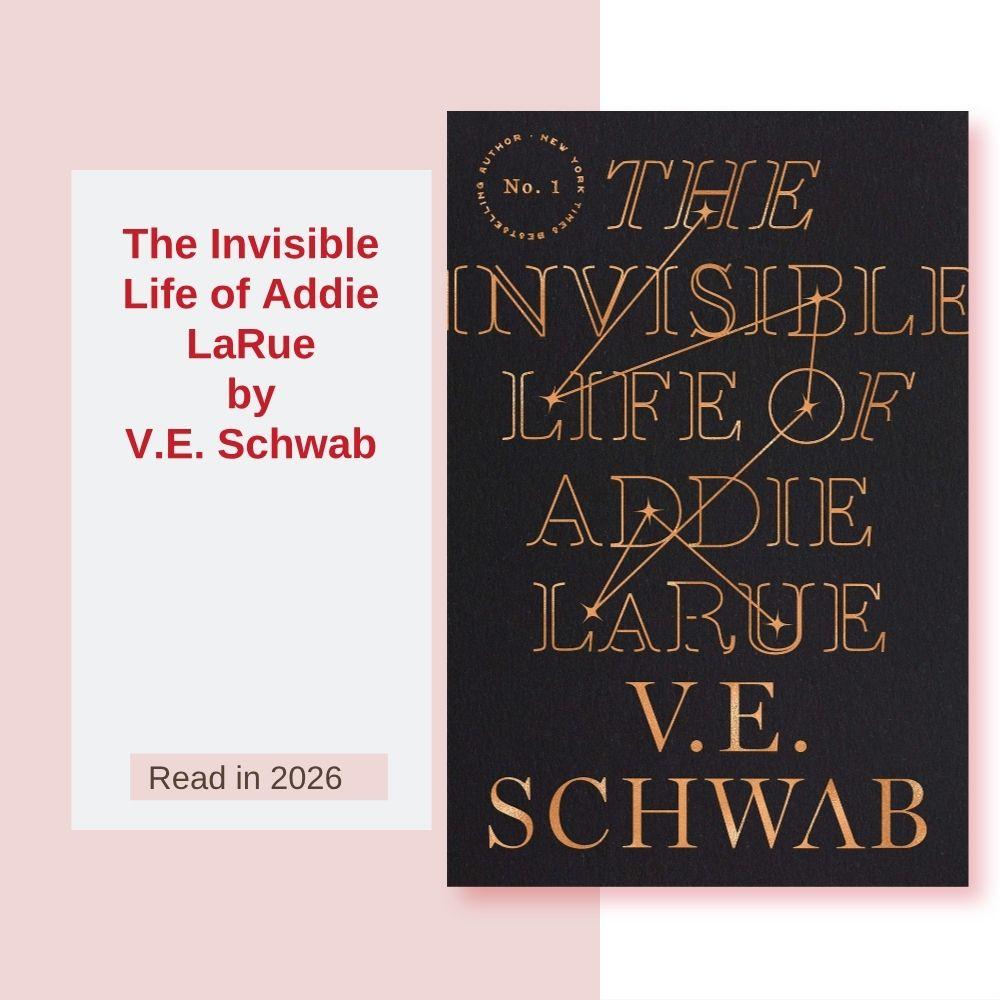
I read V.E. Schwab’s Vicious for a previous challenge, and to say I disliked it would be a polite understatement. However, Addie LaRue completely redeemed the author for me. It was deeply thought-provoking and enjoyable, even if it had its flaws.
The story opens in 1719 with Addie, a young woman who bargains with the devil to escape her provincial life and gain immortality. Yet, once life gets hard, she rails against the unfairness of her deal—even though running away from home would have been just as brutal. This early setting presents the book’s first missed opportunity: exploring how the plight of women has dramatically shifted over three centuries. Addie briefly notes how difficult it is to be an independent woman in the 18th century, but the narrative never fully builds on that thought to show how much easier—or differently challenging—it is today.
Because no one can remember Addie, the plot faces a core constraint: it’s difficult to build secondary characters who can truly move her story forward. That leaves us primarily with Henry and the devil. The more we encounter the devil, the less believable he becomes. He increasingly takes on a human form with magical powers attached. While he is a thrilling character, I almost think the plot would have been stronger without him after that first night. Addie’s loneliness would have felt far more oppressive, making her meeting with Henry—the one person who remembers her—that much more dramatic.
Schwab clearly loves art and Western history, but at times she bites off more than she can chew. Instead of thoroughly developing a scene in a specific time and place, the book often feels like a series of quick snapshots: Addie now, Addie 50 years ago, Addie 150 years ago. Yet, Addie herself notes that history isn’t just photographs. You can’t simply drop a woman into 18th-century France and then whisk her away to Florence mid-revolution without losing texture.
That said, during our book club discussion, several of my visually impaired clients praised the rich, beautiful descriptions of art, which was wonderful to hear.
Addie herself feels a bit too perfect. She is constantly the victim or the heroine, without major character flaws. On top of that, she effortlessly picks up over eight languages, learns the piano, and master’s Western art appreciation. She feels less like a complex, fully formed person and more like a idealized blank canvas. I also wondered if she ever traveled outside of Europe. Did she ever visit Asia, Africa, or the Middle East? If you’re spanning three centuries of world history but never leave the Western Canon, you’ve still seen very little of what the world has to offer.
What touched me most were the descriptions of Addie’s childhood and her early years of escape. Her repeated, painful returns to her hometown of Villon felt raw, true, and deeply representative of anyone uprooted from home. The way the book explores the passage of time—and what it does to memory—was genuinely moving. Ultimately, this story was a great reminder that words matter: how you phrase a wish vs. what you actually mean makes all the difference.